About Primary School Fundraising
Primary school fundraisers are child-friendly activities and events designed to raise money while teaching pupils community values, teamwork, and basic money-management skills. This guide shows teachers, parents, and PTA members which fundraisers work best for young children, why those activities succeed, and how to plan them with safety and practicality in mind. Many schools need reliable, low-cost ways to fund classroom resources, trips, and extracurriculars, so the ideas here focus on age-appropriate engagement, realistic volunteer duties, and measurable returns.
Quick Facts
- Bake sales raise $150-$400 per event
- Plan 6-8 weeks ahead for larger events
- Gamification boosts participation rates
What Are the Easiest and Most Successful Fundraisers for Primary Schools?
An easy and successful primary school fundraiser pairs low setup cost with broad participation and simple supervision, delivering predictable revenue with minimal adult workload. These fundraisers work because they match children's energy and skills—baking, reading, walking—and convert small actions into collective financial impact.
Bake Sale
Simple to organize and family-friendly, bake sales convert donated goods into steady income.
Read-a-thon
Sponsors pledge per page or minute read, encouraging literacy while raising funds.
Walk-a-thon / Fun Run
Children collect pledges per lap; outdoor and inclusive, suitable for many ages.
Coin Trail / Dress-Down Day
Low-cost, high-participation options that encourage quick community giving.

Which Simple Fundraising Activities Work Best for Young Children?
Young children respond best to short, tangible activities that reward participation and are easy to explain; these include bake sales, read-a-thons, sponsored walks, and themed dress days. Bake sales harness parental baking skills and provide an immediate exchange—product for price—while read-a-thons tie fundraising to learning outcomes and classroom goals, increasing parental buy-in.
Revenue Comparison
| Fundraiser Type | Upfront Cost | Net Revenue |
|---|---|---|
Bake Sale | Low (donated goods) | $150–$400 per event |
Read-a-thon | Low (print materials) | Moderate–High; depends on pledge rates |
Walk-a-thon / Fun Run | Low–Medium (cones, safety) | Moderate–High; scalable by pledges |
Car Wash | Medium (supplies, water access) | $200–$800 |
This table highlights typical cost and revenue ranges so organisers can match ideas to budget and scale.
How Can Primary Schools Organize Fun and Engaging Fundraising Events?
Organizing a successful event-based fundraiser requires a clear timeline, assigned responsibilities, and layered income streams that include tickets, stalls, and sponsorships; this structure helps schools transform one-day efforts into sustained fundraising opportunities.
Ticket Sales
Family & single admission
Food Stalls
Refreshments & treats
Games & Raffles
Fun activities for kids
Sponsorships
Local business support

What Are the Best Sponsored Challenges and Active Fundraisers for Kids?
Sponsored challenges—walk-a-thons, read-a-thons, sponsored silences—work by converting small, repeatable child actions into pledged donations; this model is effective for primary schools because it links fundraising to measurable achievements. Create simple pledge structures (per lap, per page, flat donation), provide printable pledge forms and clear collection deadlines, and set class targets with small rewards to boost participation.
Safety First
- Establish supervision ratios
- Route maps for outdoor activities
- Hydration stations for active events
- Parental consent and permission slips
Boost Participation
- Classroom charts and leaderboards
- Small rewards at milestones
- Class targets with prizes
- Quick collection window after event
How Do Talent Shows, Sports Days, and School Fetes Boost Fundraising Success?
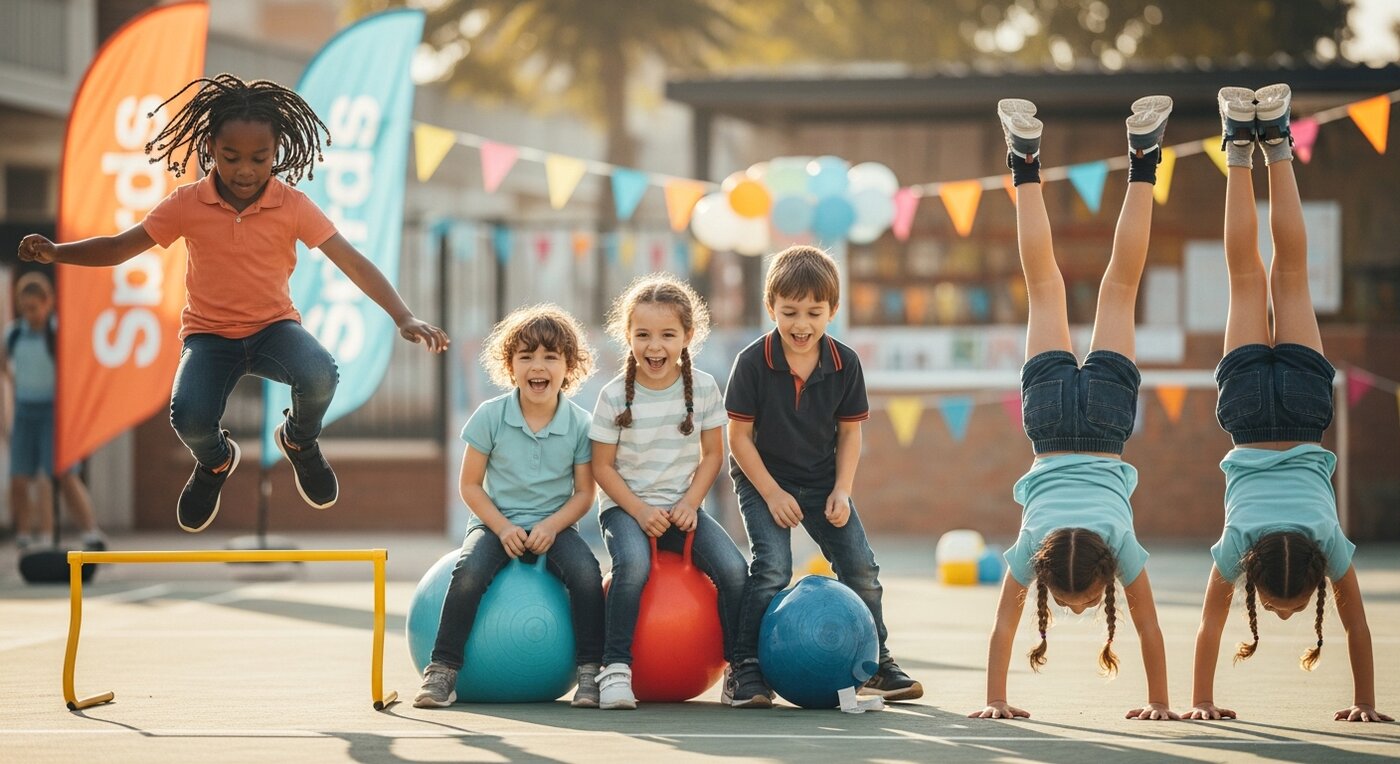
Talent shows, sports days, and school fetes combine multiple revenue channels—ticket sales, food stalls, games, and sponsorships—so they typically generate higher overall income and increase community visibility for the school.
Talent Shows
Sports Days & School Fetes
What Are Creative and Unique Fundraising Ideas for Primary School Kids?
Creative fundraisers spark community interest and can attract new donors by offering memorable experiences that are family-friendly and easy to promote. Novel ideas—pet washes, costume contests, outdoor movie nights, themed swap shops—bring variety and can be tailored to match school values or seasonal calendars.
Eco-Friendly Fundraiser Ideas
Eco-friendly fundraisers combine sustainability education with fundraising by selling reused items, hosting swap shops, or running recycling drives that encourage donations in exchange for eco-friendly goods or experiences.
How Can Digital and Online Fundraising Platforms Help Primary Schools Raise Money?
Digital and online fundraising platforms increase reach, simplify payment collection, and provide campaign-tracking tools that make it easier for schools to manage supporters and measure outcomes. Donation portals, event ticketing systems, and gamified apps each serve different use cases—from one-off event ticket sales to long-running giving campaigns.
Platform Comparison
| Platform Type | Key Features | Typical Use Case | Pros/Cons |
|---|---|---|---|
| Donation Pages | One-off & recurring payments, donor records | Ongoing PTA support and recurring giving | Pro: easy recurring donations. Con: requires stewardship plan. |
| Event Ticketing | RSVPs, paid tickets, check-in tools | School events, performances | Pro: simplifies admissions. Con: fees may apply. |
| Gamified Apps | Badges, leaderboards, progress tracking | Read-a-thons, sponsored challenges | Pro: boosts engagement. Con: setup complexity for younger users. |
How Does Gamification Increase Engagement?
Gamification uses elements like badges, leaderboards, and micro-challenges to convert routine actions into motivating progress markers, making fundraisers more fun and repeatable for young children. For a read-a-thon, use class leaderboards for pages read and award stickers or badges at milestones; for sponsored walks, create lap targets with small class prizes and visual charts.
What Are the Key Steps to Plan and Execute a Successful Primary School Fundraiser?
Effective fundraiser planning follows a clear checklist: define goals and budget, form a committee, assign volunteer roles, complete safety checks, run a promotion schedule, and measure results after the event. This phased approach ensures every task has an owner and a deadline, reducing last-minute workload and clarifying expectations.
Goal Setting & Budget
Volunteer Recruitment
Promotion & Ticketing
Safety & Operations
Operational Planning Checklist
| Task | Responsible Party | Time Estimate | Tools/Supplies |
|---|---|---|---|
| Set fundraising goal & budget | PTA committee | 2–4 hours | Budget template, meeting notes |
| Volunteer recruitment & rota | Volunteer coordinator | 1–2 weeks | Sign-up sheets, messaging templates |
| Promotion & ticketing | Communications lead | 2–4 weeks | Flyers, email templates, social copy |
| Health & safety checks | Headteacher / admin | 1–2 weeks | Risk assessment, permission forms |
| Event-day operations | Event leads | Full day | Cash box, float, first-aid kit, radios |
How Do Schools Recruit Volunteers and Promote Fundraising Events Effectively?
Volunteer recruitment works best when it uses multiple channels and clear, short role descriptions: send targeted emails to parents, post sign-up forms at drop-off, ask local older students for support, and approach community groups for specialist help.
Campaign Lead
Overall coordination
Finance Keeper
Track & deposit
Comms Lead
Outreach & social
Event Leads
Day-of operations
Safety Officer
Risk & first aid
Promotion Best Practices
Email parents
Targeted messages with clear calls-to-action
Class messaging apps
Quick updates and reminders
Community boards
Local noticeboards and posters
Word of mouth
Parent-to-parent recommendations
What Legal and Safety Considerations Should Schools Keep in Mind?
Legal and safety essentials include safeguarding policies for events with children, food hygiene for bake sales, appropriate insurance and local permits where required, and clear parental consent for activities that involve physical challenges or off-site elements.
Safeguarding
- Adequate supervision ratios
- First-aid trained staff on site
- Clear safety briefings
Food Safety
- Allergen labeling
- Safe handling practices
- Clear food hygiene protocols
Data & Permissions
- Parental consent forms
- Data protection compliance
- Secure payment methods
How Can Parents and the Community Support Primary School Fundraising Efforts?
Parents and the wider community provide time, skills, sponsorship, and in-kind support that multiplies fundraising impact beyond direct donations; their involvement is often the difference between a modest and a highly successful campaign.
Why Are Parents the Primary Source of Support?
Parents are typically the primary supporters because they have a direct stake in school quality and convenience to give time or money; they also see the immediate benefit of funds in classrooms, trips, and resources.
How Can Local Businesses Partner with Schools?
Local businesses and charities can support schools through sponsorship packages, match-giving, in-kind goods or services, and cross-promotion; these partnerships increase resources while offering businesses community visibility.