Raising funds for a track and field team takes focused ideas, clear planning, and local support — all aimed at paying for equipment, travel, uniforms, and meet fees. This guide walks coaches, booster clubs, PTAs, and parent volunteers through choosing fundraisers that actually net money.
What Are the Best Fundraising Ideas for Track and Field Teams?
The best fundraisers balance effort, timing, and likely net return so teams can pick what fits the season and volunteer bandwidth.
Discount Card Fundraisers
Low handling and high perceived value for local supporters.
Custom Track Apparel Sales
Strong margins and team visibility when families and alumni buy in.
Snack and Food-Item Fundraisers
Fast turnover and steady net income when timed around meets.
Fun Run / 5K
Great community engagement plus registration and sponsorship revenue.
Track Clinics / Youth Camps
Higher revenue per attendee with modest upfront logistics.
Matching the fundraiser to team size and volunteer capacity reduces friction and boosts participation; pairing an easy, high-return product sale with a community event often maximizes results.
Effort vs. Net Return Comparison
This table summarizes typical effort and net return so teams can quickly compare and select a primary fundraiser.
Fundraiser Type Comparison
| Fundraiser Type | Effort Level | Typical Net Return & Notes |
|---|---|---|
| Discount Card Fundraisers | Low | Moderate-high net return; easy to distribute and needs few volunteer hours |
| Custom Merchandise (Apparel) | Medium | High net margin on pre-orders; requires production lead time |
| Snack & Food-Item Sales | Medium | Fast cash flow; follow food-safety rules and school policies |
| Fun Runs / 5K Events | High | High gross potential from registration and sponsors; needs solid logistics |
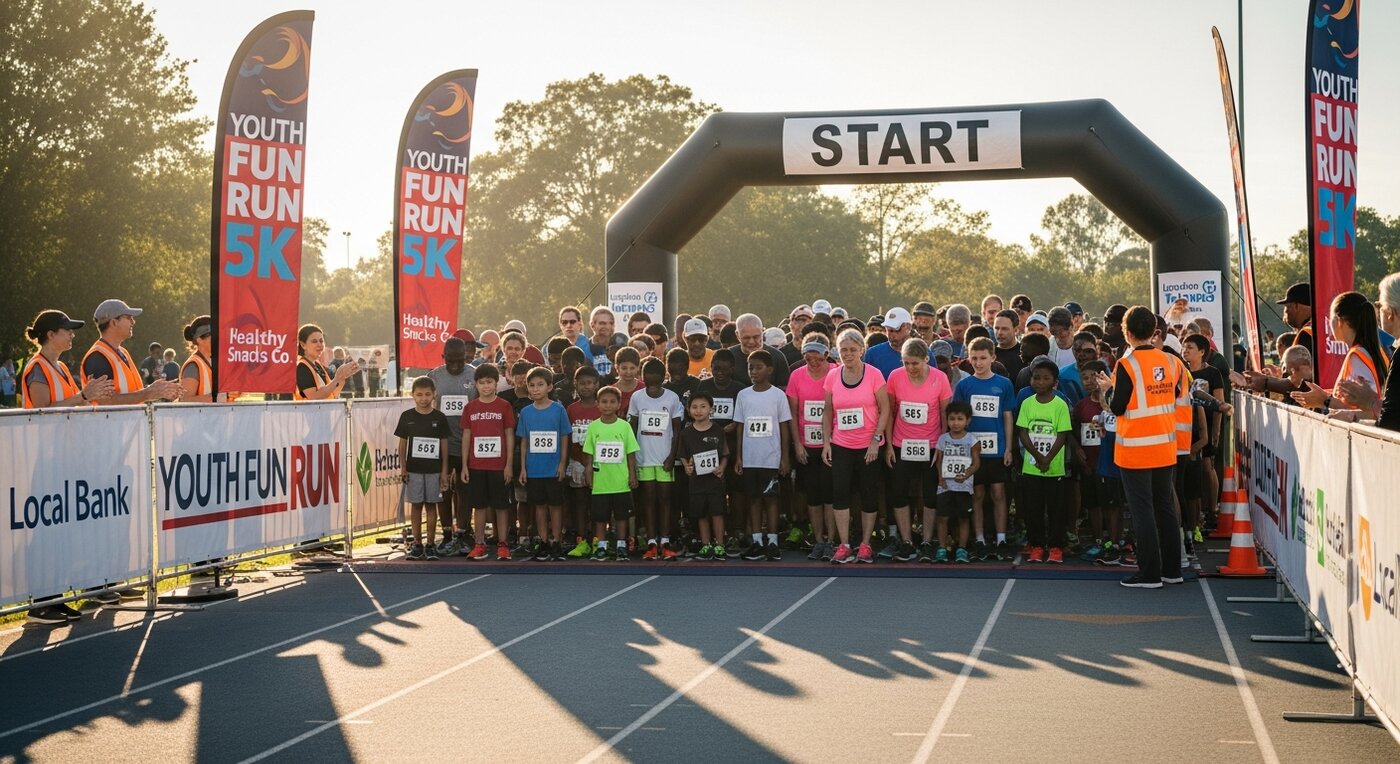
How Can Event-Based Fundraisers Boost Track Team Funds?
Events — fun runs, race nights, or food-truck evenings — bring in money through registration, sponsorships, and on-site sales while raising the team's profile.
A well-run event turns local interest into immediate revenue and longer-term sponsor relationships by offering visible deliverables like signage, social shout-outs, and vendor booths.
Tiered registration, add-ons (shirts, timing chips).
Vendor fees and sponsor tiers for revenue.
Map timeline with permits 6-8 weeks out.
How to Organize Easy and Effective Fundraisers
Start by setting clear goals, a timeline, and defined volunteer roles so responsibilities are shared and accountability is visible.
Set Financial Goal
Set a clear financial goal and itemize intended uses to justify the ask.
Choose Methods
Choose fundraising methods that match volunteer capacity and the team's schedule.
Create Promo Calendar
Create a promotional calendar and outreach plan for families, alumni, and local media.
Recruit Volunteers
Recruit and assign volunteers with specific tasks and shift times.
Run & Reconcile
Run event logistics, collect funds, and reconcile accounts within one week after.
Which Product-Based Fundraisers Work Best?
Product-based fundraisers — discount cards, cookie dough, snack items, and custom apparel — work because they offer predictable margins and broad appeal to families and local supporters.
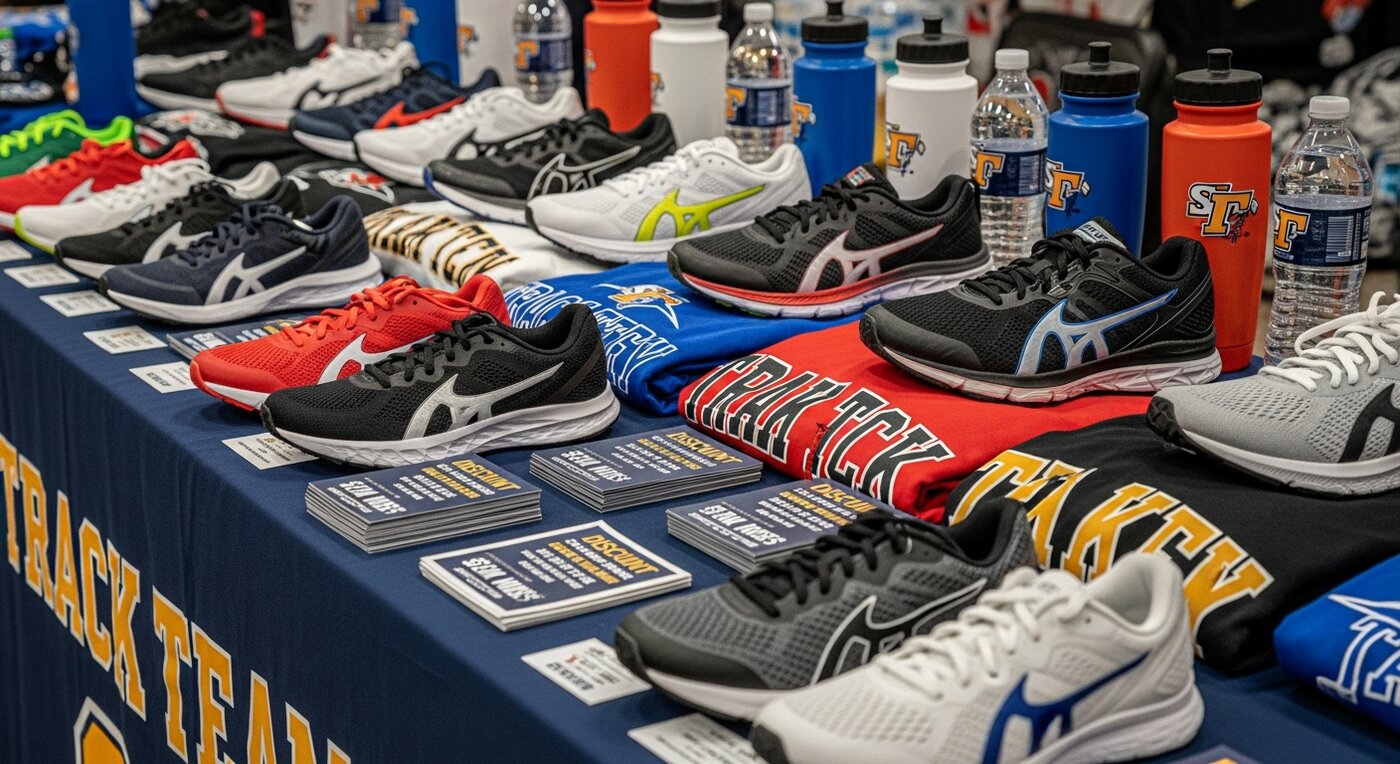
Custom apparel doubles as fundraising and team promotion; running it as a pre-order avoids inventory risk and lets teams set margins from production costs.
Discount cards need minimal volunteer time for distribution.
Set an order cutoff and assign volunteer distribution shifts.
Use basic tally sheets for reconciliation.
What Are the Top Online Fundraising Strategies?
Online strategies include donation platforms, and digital sales like e-gift cards or online apparel orders — each fits different needs. This comparison highlights trade-offs between reach, recurring potential, and product logistics.
Platform Type Comparison
| Platform Type | Key Features | Best Use Case |
|---|---|---|
| Donation Platforms | Recurring gifts, donor export, low-fee plans | Long-term booster support and recurring annual donations |
| Digital Storefronts | Inventory, pre-orders, payment processing | Selling custom apparel and gear via pre-order windows |
| Online Discount Cards | Digital redemption, mobile access | Community discounts with low overhead and repeat sales |
How to Secure Sponsorships for Track and Field
Sponsorships take research, prioritized outreach, and packages that show measurable benefits to local businesses while supporting team goals.
Approach Local Businesses
Approach with research and a personalized value pitch that emphasizes community goodwill and measurable visibility. Offer benefits sized to the business.
Create Sponsor Packages
Typical tiers (bronze, silver, gold) map contribution levels to deliverables like logos on shirts, banners at meets, social mentions, and sponsor-led clinics.
Track sponsor deliverables and send a concise post-event report to strengthen relationships and increase the chance of multi-year support.
Frequently Asked Questions
What are the best fundraising ideas for track and field teams?
The best fundraisers balance effort, timing, and likely net return. Strong choices include product sales (discount cards, snacks, custom apparel), events (fun runs, youth clinics), and hybrid campaigns that combine pre-sales with an event.
Which product-based fundraisers work best for track teams?
Product-based fundraisers — discount cards, cookie dough, snack items, and custom apparel — work because they offer predictable margins and broad appeal to families and local supporters. Custom apparel doubles as fundraising and team promotion.
How can event-based fundraisers boost track team funds?
Events — fun runs, race nights, or food-truck evenings — bring in money through registration, sponsorships, and on-site sales while raising the team's profile. Revenue levers include tiered registration, add-ons, vendor fees, and sponsor tiers.
What are the top online track and field fundraising strategies?
Online strategies include donation platforms and digital sales like e-gift cards or online apparel orders. Hybrid campaigns combine online pre-sales with event activations for bigger reach. Key elements: clear story, tiered donor rewards, strong images.
How to secure sponsorships for track and field fundraisers?
Sponsorships take research, prioritized outreach, and packages that show measurable benefits to local businesses. Start with a target list of local businesses and alumni-owned companies, and match offers to audience fit.
How can parents and teachers maximize volunteer engagement?
Volunteer engagement improves with clear role descriptions, short shifts, and easy sign-ups. Micro-tasking creates small roles (30-90 minute shifts) that are easier for parents to commit to. Incentives like recognition help increase participation.